A bar-tailed godwit called Phil has captured scientific attention by completing a remarkable 6,800-mile round trip from Norfolk to Siberia, offering researchers unprecedented insight into the endurance feats of this long-distance migrant, as reported by The Guardian.
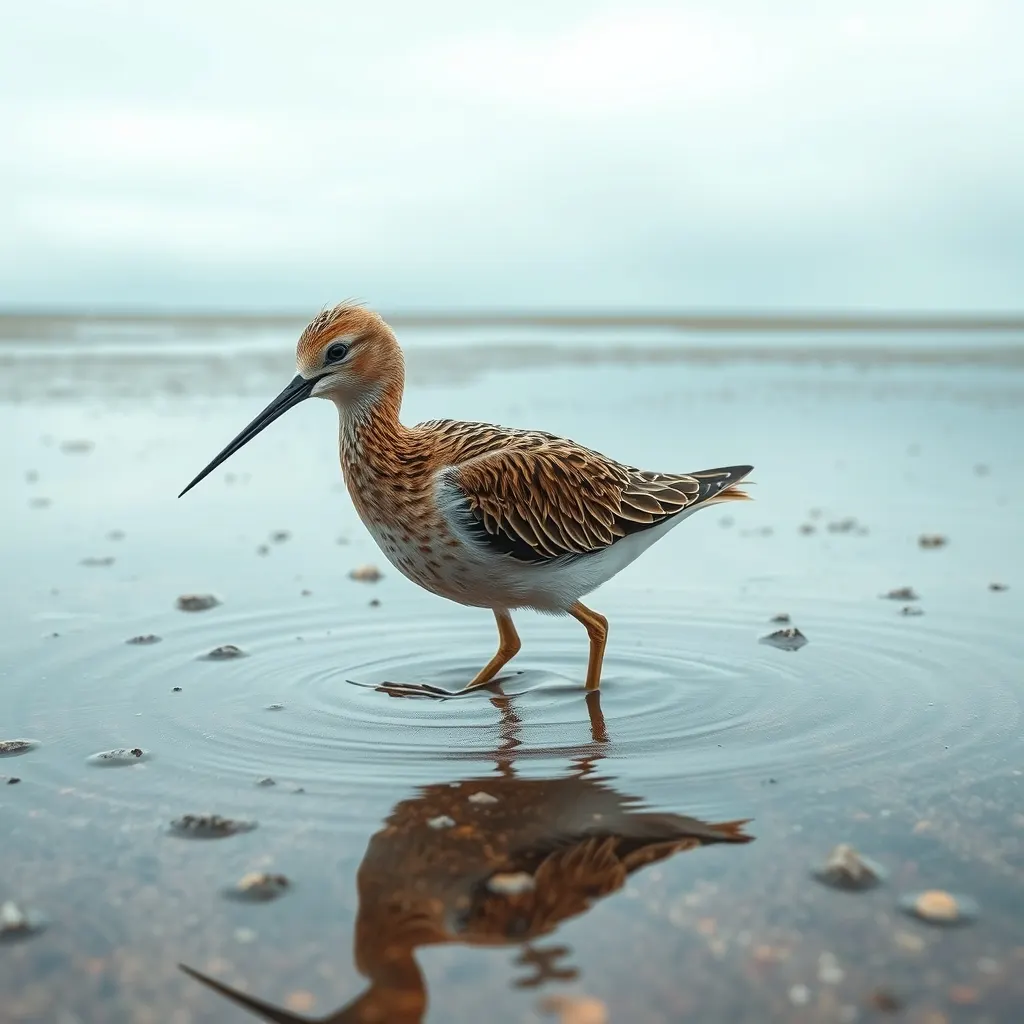
The wading bird, which is not much larger than a pigeon, is already renowned among ornithologists for making the longest recorded non-stop migratory flight of any bird species. Populations that visit Britain spend their summers breeding within the Arctic Circle before retreating south to the unfrozen wetlands of Britain during the winter months.
Tracking the Extraordinary Journey of Phil the Bar-Tailed Godwit
The full extent of these long-distance capabilities was brought to light thanks to scientists from the RSPB utilizing a specialized tracker weighing just six grams. This device was fitted to Phil in January by the Wash Wader Research Group, an organization that chose to name the bird in honor of Phil Ireland, who served as the group’s leader for many years.
Following the fitting, the lightweight tracker successfully charted Phil’s migration path. In March, the bird travelled from the Wash to the Wadden Sea coasts spanning the Netherlands, Denmark, and Germany. By late May, Phil had pushed further onward to the Taymyr peninsula located in central Siberia.
During his return journey southward, Phil flew over the Arctic Ocean off the coast of northern Norway, pausing briefly on three small Norwegian islands before heading back down to the Wadden Sea. He has since been officially recorded safely back at RSPB Snettisham on the edge of the Wash. This location is famous for hosting thousands of birds that flock together at the highest of tides, creating one of the most prominent wildlife spectacles of the British winter.
The Importance of the East Atlantic Flyway
Jeff Kew, a coastal adviser for the RSPB, expressed astonishment at the feat. “It’s amazing to think that a bird we tagged here on the Wash in January has travelled thousands of miles to Siberia and made it all the way back again,” he noted. Kew emphasized that tracking individual birds like Phil serves as a stark reminder that protecting migratory species must be an international effort, given that many cross borders and rely on interconnected networks of wetlands.
Bar-tailed godwits visiting Britain utilize a segment of the east Atlantic flyway, a major migratory superhighway extending all the way from the Arctic down to South Africa, facilitating the annual migration of millions of birds. The vast mudflats of the Wash serve as a critical feeding and resting ground for numerous species.
Dr Nigel Clark of the Wash Wader Research Group reinforced this perspective, stating that the Wash remains the United Kingdom’s single most crucial coastal wetland for migratory waders, where spectacular numbers gather during autumn and winter. Clark added that tracking individual birds demonstrates the deep ecological connection between the Wash and the broader flyway, proving that this entire network of sites is vital for survival.
Source: Meet Phil, the bar-tailed godwit tracked on a 6,800-mile round trip to Siberia (source-feed timestamp 2026-11-19T05:01:17+00:00). AI-assisted report based on the cited linked article and its RSS feed; details were not independently verified.
Context matters. Read about our editorial standards and corrections policy.



Join the conversation