News event: 2026-10-25. Updated: October 26, 2026.
Elon Musk says SpaceX has completed a $40 billion debt financing arrangement intended to fund purchases of Nvidia graphics processors for artificial-intelligence computing. Reuters reported the claim on October 25, while noting that details of the transaction’s pricing and completion remained unclear. The figure should therefore be understood as Musk’s account rather than an independently verified financing total.
Why the financing matters
Training and operating advanced AI systems requires expensive processors, networking equipment, power supplies and cooling. The proposed scale of SpaceX’s spending illustrates how competition in AI has moved beyond software into the capital-intensive construction of computing capacity.
According to Reuters, Musk said the callable debt would largely pay for GPUs expected to arrive in the first half of 2027. He pointed to revenue from Starlink and launch operations as support for the company’s borrowing capacity. He also projected fourth-quarter 2026 capital expenditure of $35 billion to $40 billion, a company expectation rather than a completed outlay.
A warning for smaller AI-cloud providers
Musk argued that specialized AI cloud operators without established revenue streams may find debt markets increasingly difficult to access. He predicted consolidation or failures among some so-called neocloud providers and said SpaceX was not seeking to acquire them.
Those predictions are not outcomes. Financing conditions depend on interest rates, customer contracts, asset values and lenders’ confidence that new computing equipment will generate sufficient cash flow. Rapid changes in chip performance can also affect how long hardware remains commercially attractive.
The reported deal adds to a larger business question: can the revenue generated by AI services keep pace with the cost of building them? Investors will need more than announced borrowing figures to answer that question. Confirmed financing documents, capital spending and operating cash flow will be the critical measures to watch.
Sources and verification
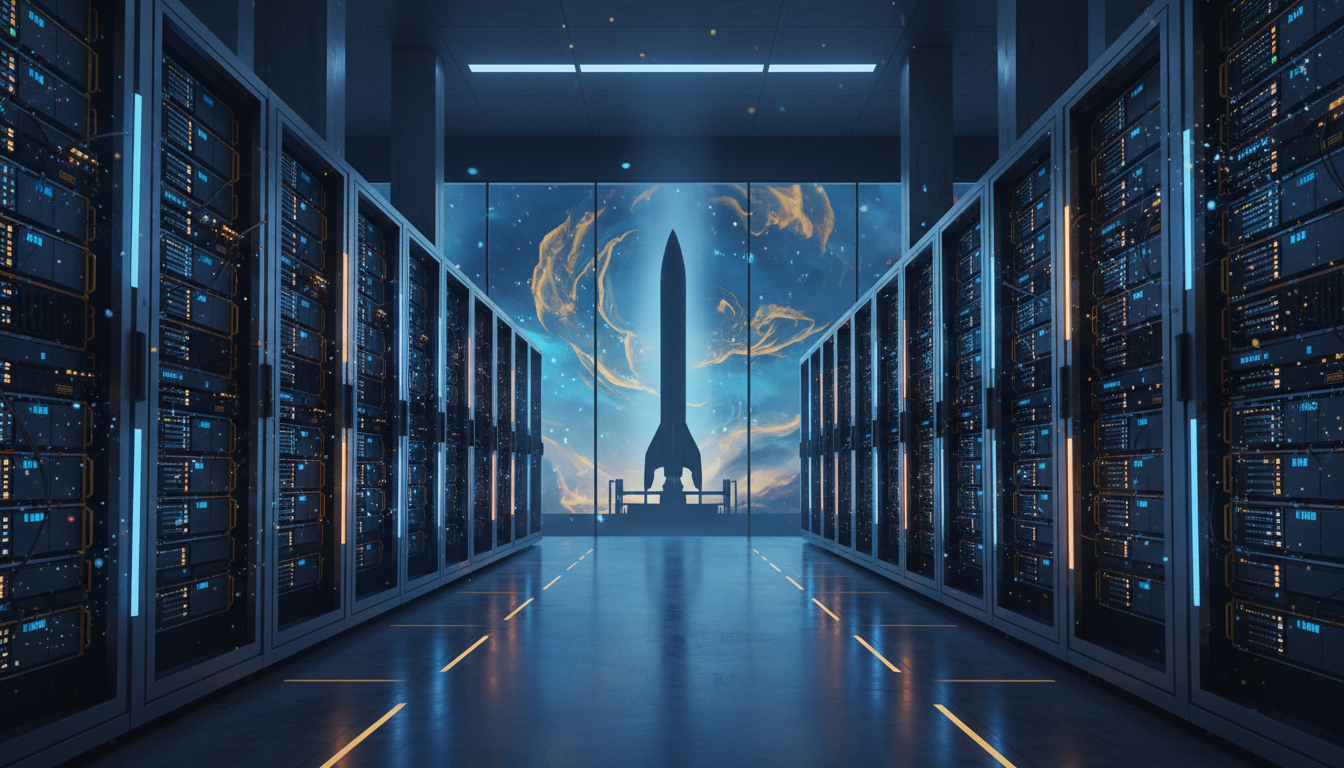
Featured image: original AI-generated conceptual illustration; not a photograph of the reported event.
Context matters. Read about our editorial standards and corrections policy.


Join the conversation