An exceptionally rare 16th-century German manuscript known as the Book of Miracles is heading to auction in London, where it is expected to fetch between £700,000 and £1m as the star lot at Christie’s valuable books and manuscripts sale. According to The Guardian, public institutions will receive the first opportunity to bid for the unique wonderbook before it goes under the hammer on 10 December, alongside a six-day public exhibition.
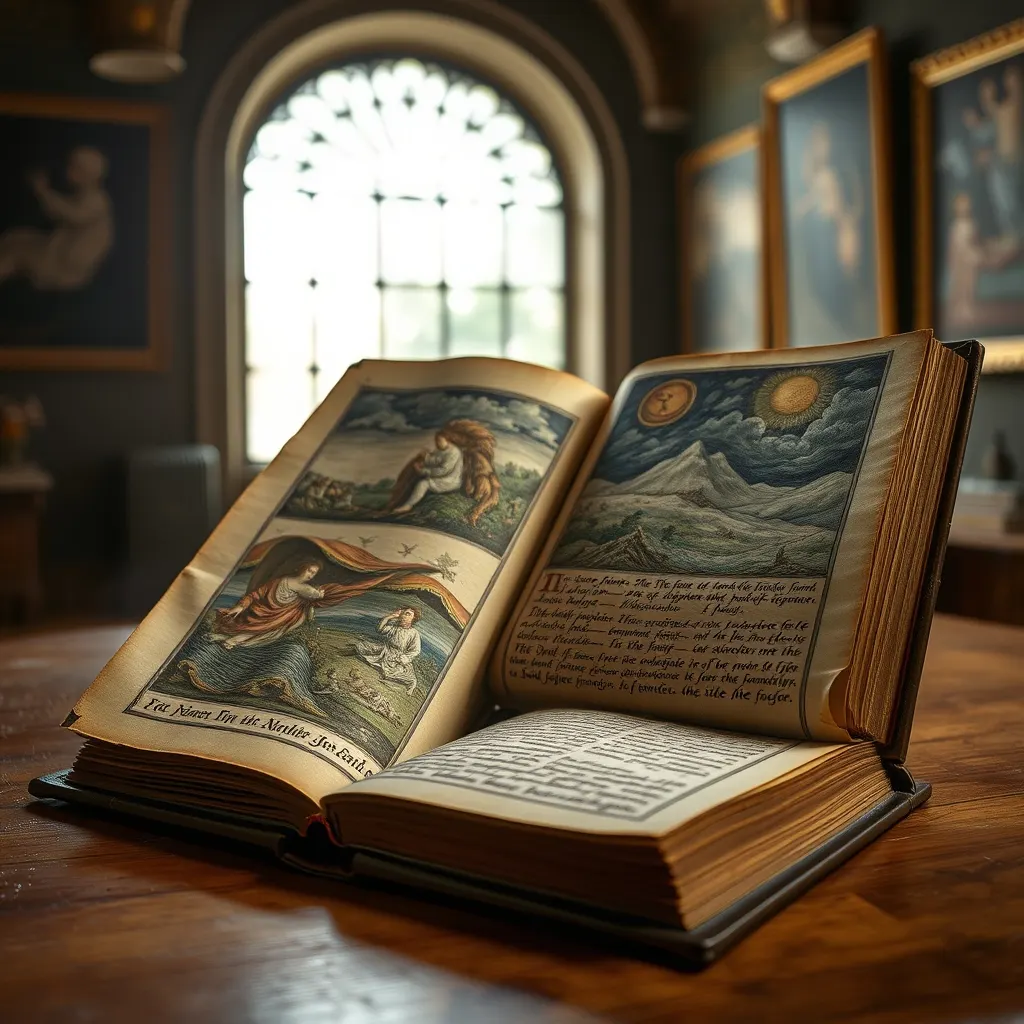
Created during the mid-16th century, the manuscript contains 167 watercolour and gouache paintings depicting apocalyptic visions, celestial wonders, and extreme weather events. The volume is the only known copy in existence. Scholars note that during the period when earthquakes, storms, and floods were frequently interpreted as divine warnings, the manuscript captured public anxiety regarding doctrinal disunity and climatic anomalies.
Inside the 16th-Century Book of Miracles
The illustrations within the manuscript record a wide array of historical and anomalous events. One scene depicts five suns blazing over Leipzig in 1551, which experts identify as a parhelion or sun dog. Another portrays blood rain falling on Rome in 1456, a phenomenon caused by red dust particles mixing with rain clouds. Additional pages illustrate monstrous hailstones striking Dordrecht in 1552, a plague of locusts in Poland in 1527, fiery comets, eclipses, and flying dragons over Bavaria in 1533 that scholars believe represent the northern lights.
Each illustration features a German caption detailing the date and geographic location of the event. Eugenio Donadoni, Christie’s international specialist in medieval and Renaissance manuscripts, described the volume as functioning like sensationalist mass media of its era. He likened leafing through its pages to modern digital habits, remarking that it feels like the 16th-century version of doomscrolling due to its heavy focus on disasters and bad news.
Historical Significance and Discovery
For nearly five centuries, the existence of the manuscript remained largely unknown to scholars. It was discovered roughly 20 years ago in the library of a small baroque castle in southern Germany. In 2008, the volume was auctioned alongside the castle’s furniture, carpets, and tankards, selling for just over £100,000 before entering the private collection of Connecticut art collector Mickey Cartin.
Experts emphasize that the manuscript bridges a critical historical gap between medieval superstition and the rise of empirical observation. While Lutheran theologians utilized similar German wonderbooks to advance Protestant eschatology, the inclusion of verified dates and geographic coordinates laid early foundations for structured reporting and scientific inquiry.
Till-Holger Borchert, director of the Suermondt Ludwig Museum in Aachen, praised the visual impact of the manuscript, noting that £1m is a conservative estimate for its value. Following the publication of a facsimile in 2013, the volume gained a dedicated following among enthusiasts of historical apocalyptic imagery, cementing its status as a striking artifact of European history.
Source: ‘It’s like the 16th-century version of doomscrolling’: the Book of Miracles may fetch £1m at auction (source-feed timestamp 2026-11-16T07:00:38+00:00). AI-assisted report based on the cited linked article and its RSS feed; details were not independently verified.
Context matters. Read about our editorial standards and corrections policy.



Join the conversation